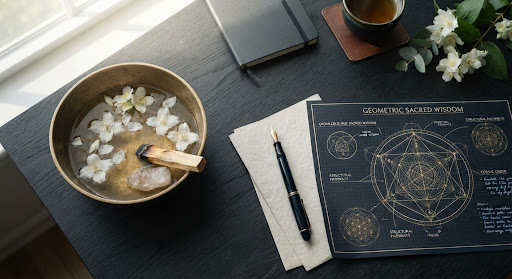
Understanding the subtle energy channels that govern financial prosperity within multi-level residential structures.
A penthouse presents a Vastu consultant with an unusual set of questions. It is tall rather than wide, it is often split across levels, it opens onto terraces and glass on several sides, and it rarely follows the tidy square plot that the classical texts assume. Yet the principles behind prosperity in Vastu are not tied to a particular shape. They are about how a space is entered, how it circulates, and how its centre is treated.
The direction of wealth
In the Vastu tradition, the north is the direction of Kubera, keeper of wealth, and it is associated with opportunity and the movement of money. A penthouse that draws in light and air from the north, and keeps that side open and uncluttered, is said to keep opportunity moving. Practically this means resisting the urge to wall off a north-facing terrace with heavy planters and storage, and keeping the north wall of the main living space free of oversized, dark furniture.
The traditional placement for the safe or valuables cupboard is against the south or west wall of a room, with its door opening towards the north, so that the wealth is symbolically facing Kubera's direction. Bedrooms are usually best located towards the south-west, and the kitchen towards the south-east, the seat of fire.
Protect the centre
Every classical plan holds a central zone called the Brahmasthan, understood as the heart of the home. It is meant to stay open and light. In multi-level homes the centre is often where the staircase or lift core is placed, because that is where the structure is strongest. Vastu advises against heavy construction, a spiral staircase, or a toilet at the exact centre. If the core cannot move, the remedy is to soften its effect: keep the surrounding floor area open, light the space well, and avoid stacking storage around it.
Levels, stairs and flow
Energy in a penthouse is easier to picture as circulation. A few principles are worth holding in mind:
- Staircases are best placed along the south, west or south-west walls and should turn clockwise as they rise.
- The main entrance should feel welcoming and well lit. A cluttered lobby or a door that opens onto a blank wall is the first thing to fix.
- Water features such as a fountain or aquarium belong in the north or north-east, never in the south-west or south-east.
- Terraces and gardens are best kept lighter towards the north and east, and heavier, with tall planters or seating, towards the south and west.
Ceilings, light and glass
High ceilings and glass walls are a signature of modern penthouses, and they bring their own considerations. Very tall single-height volumes are said to disperse energy, so we suggest defining zones within them using rugs, low partitions and lighting. Expanses of glass should be softened with curtains or blinds, particularly in bedrooms, to create a sense of shelter.
A note on realism
Vastu is a guide for arranging a home with care. It does not replace sound financial planning, and no arrangement of furniture can promise a particular outcome. What it offers is an ordered way of looking at a space, so that the home supports focus, rest and good decisions. If you are planning a new penthouse or refurbishing an existing one, share the floor plan early. It is far easier to place a staircase well on paper than to correct it afterwards.